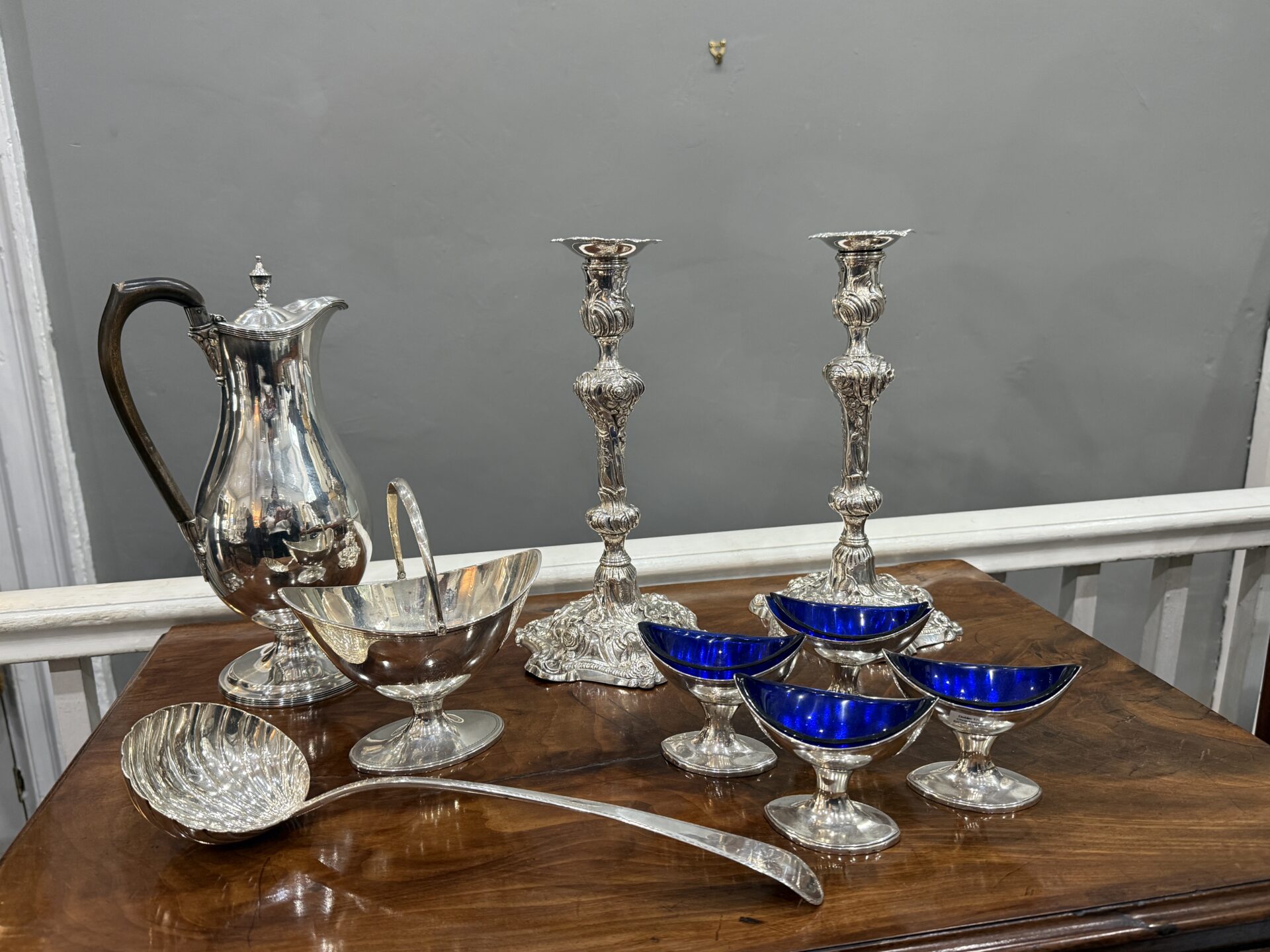
Antique, vintage and reproduction get used almost interchangeably in everyday conversation, but they mean genuinely different things, and the difference matters for both authenticity and price. In short: antique conventionally means genuinely 100 years old or more, vintage is a much looser term usually applied to anything several decades old, and reproduction means a later piece deliberately made in an earlier style. The rest of this guide expands on each of those definitions and gives you some practical ways to tell them apart in person.
What actually makes something an ‘antique’ and the 100 year rule
The convention that an antique must be at least 100 years old originally comes from customs and import-duty definitions, but it has stuck as the trade’s working standard ever since. It is worth remembering that this is a moving line rather than a fixed one: a piece made in the mid-1920s has only relatively recently crossed into genuinely “antique” territory, and pieces will keep crossing that threshold every year. If a dealer describes something as antique, it should, by this convention, be at least a century old.
Vintage vs antique
“Vintage” has no fixed cutoff in the way “antique” does. It is often used loosely for anything that feels meaningfully older than current design, sometimes covering pieces as recent as 20 to 30 years old. However, for us at Beau Nash, we consider vintage to be at least 50 years old.
This is where a lot of buyer confusion, and occasionally some sharper practice, tends to creep in, since “vintage” can be applied to items that are genuinely decades away from qualifying as antique. If a piece is described as vintage rather than antique, it is worth asking directly how old it actually is, rather than assuming the two terms mean roughly the same thing.
What is a reproduction, and how is that different from a fake?
A reproduction is a later piece deliberately made in an earlier style, openly sold as such. There is nothing dishonest about a well-made reproduction; it simply is not an antique, and should be priced and described accordingly. A fake, by contrast, is a reproduction being deliberately misrepresented as genuinely old, usually to command a higher price than it is actually worth.
The distinction is not an accusation against reproductions generally, most are perfectly legitimate, but it is an important one to understand before you buy.
Be on the look out for words like “style” as in, “Georgian style” to recognise reproductions. It’s not saying that the piece itself is Georgian; it only says it’s made in the Georgian style. Another word we see often is “revival” .
What are some practical tells?
If you are trying to judge a piece’s age in person or from photographs, a few practical details tend to be the most reliable guide.
Wood and timber
Genuine age tends to show in the timber itself: colour that has deepened and mellowed over decades, natural shrinkage across the grain, and oxidisation that looks different on an underside or interior surface compared to a top or front that has seen light and handling. Older pieces also often use secondary timbers, a cheaper wood used for interior or unseen parts of a piece, which can be a useful clue in itself.
Joinery and construction
How a piece is joined together is one of the most reliable dating tools available. Hand-cut dovetail joints, which are slightly irregular and often show visible saw marks, generally indicate an earlier, pre-industrial date, while perfectly uniform, machine-cut dovetails point to a later, more mechanised period of manufacture.
Hardware
Handles, screws and hinges are worth a close look. Original hardware tends to show wear consistent with the rest of the piece, while replaced hardware often looks noticeably newer, or leaves visible marks from earlier fittings that no longer match what is currently there.
Proportion and symmetry
Reproductions sometimes get individual details right while getting the overall proportion slightly wrong, often because they were made by copying photographs rather than working from an original piece directly. A trained eye can frequently sense that something is “slightly off” about a reproduction’s proportions before being able to say exactly why.
Naming
It is worth looking out for words like “style” as in, “Georgian style” to recognise reproduction. It’s not saying that the piece is Georgian; it says it’s made in the Georgian style. Another word is “revival” which does much the same thing.
Why does distinction affect value?
Genuine antiques carry a history, rarity and craftsmanship that vintage and reproduction pieces simply do not, and that difference is reflected honestly in what they cost. None of this means vintage or reproduction pieces are without value or charm, many are excellent, well-made items in their own right, but they occupy a different category, and should be priced and understood as such. If you are ever unsure whether something you are considering is genuinely antique, vintage, or a reproduction, please do ask; we are always happy to talk you through what we are looking at. Browse our current antique furniture collection, or find out more about us.